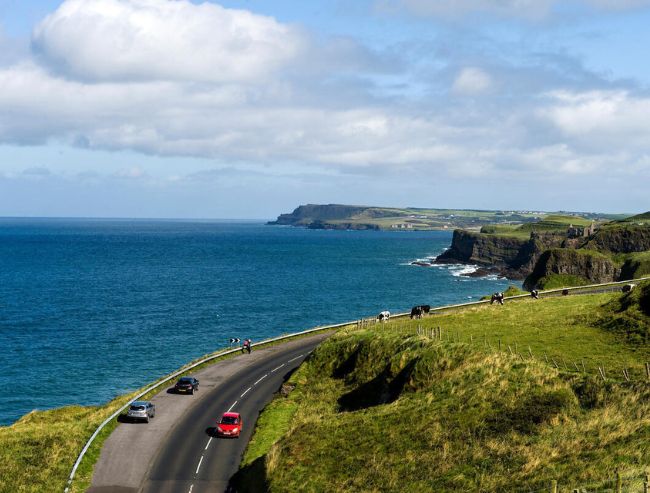

Whether you have been to Ireland many times or you are planning your first trip, driving is one of the best ways to experience the country. A self drive journey gives you the freedom to explore Ireland’s spectacular countryside, villages and some of the places that are harder to reach by public transport.
But driving in Ireland can be a little different from driving in your home country. We drive on the left, many rural roads are narrow, roundabouts are common and you may encounter everything from motorways to tiny country lanes on the same day!
To help you enjoy your Irish road trip safely and confidently, we have put together our top tips for driving in Ireland.
Please note road traffic laws can change. The Road Safety Authority (RSA) is the best source for current official information and safety guidance.
The first thing to remember when you arrive is simple:
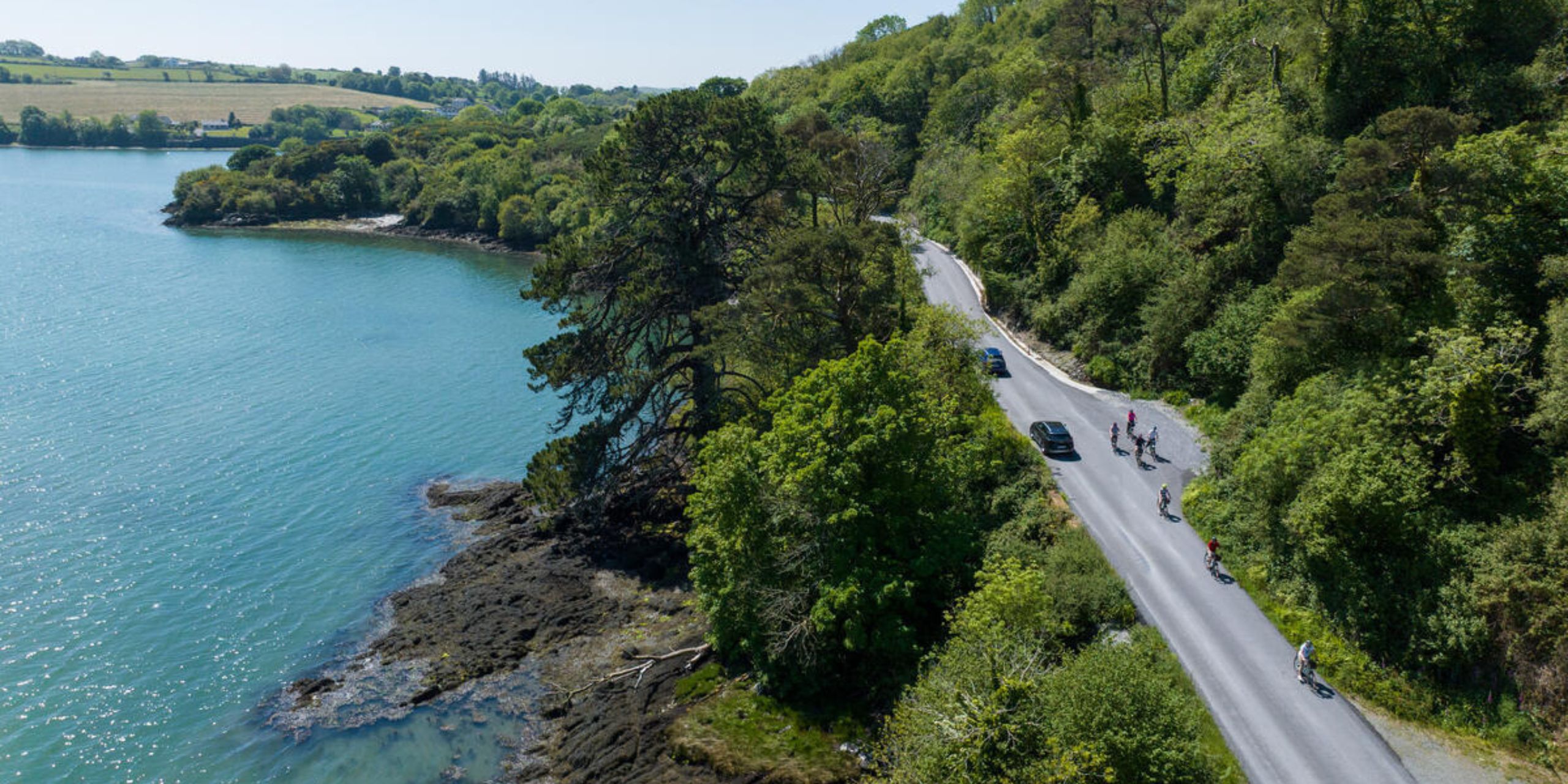
We drive on the left-hand side of the road.
A handy little phrase visitors often use is: “Left is best!”
If you normally drive on the right, take a little extra care when leaving junctions, joining roads and navigating roundabouts. It can take a little time for your brain to get used to doing things the Irish way!
Before heading off, spend a few minutes in the car park getting familiar with your car.
Check your mirrors, indicators, gears and controls. It’s much nicer to discover where the windscreen wipers are while parked rather than halfway around a roundabout!
Most Irish rental cars also have the driver sitting on the right-hand side.
When you collect your rental car, there’s no need to rush off.
Take a few minutes to get comfortable first.
A quick checklist:
If you’re not used to driving a manual car, consider booking an automatic.
Irish roads can involve plenty of hills, bends and gear changes, particularly in rural areas. There’s absolutely no prize for making your holiday harder than it needs to be!
Before you drive away, make sure you understand what’s included in your rental agreement.
Check the insurance, excess, toll arrangements and whether you’re allowed to take the car into Northern Ireland.
If you plan to cross the border, let your rental company know in advance. Different companies have different rules about insurance, documentation and cross-border travel.
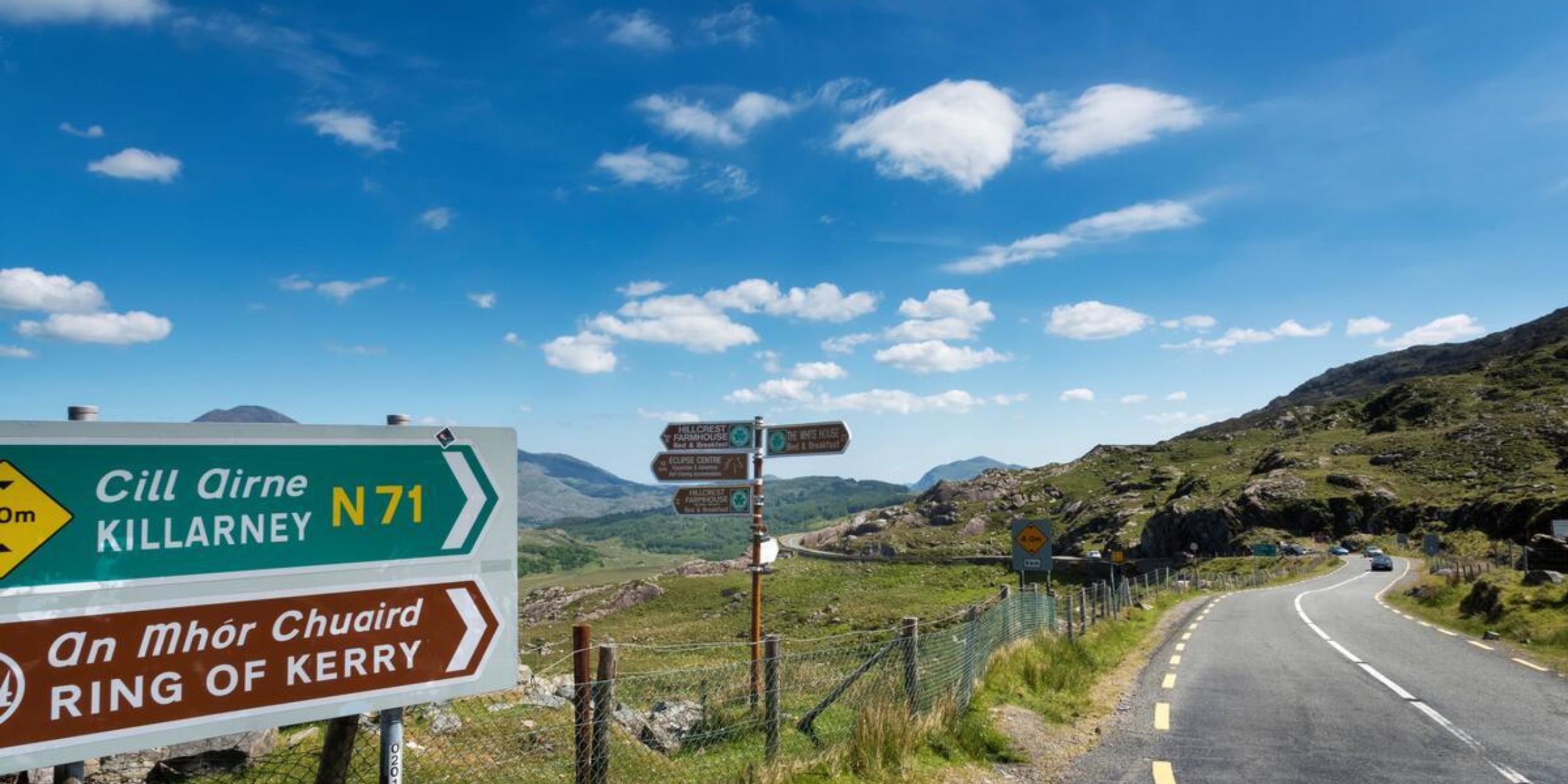
Ireland is famous for spectacular scenery, winding roads and beautiful remote places.
We’re perhaps slightly less famous for making every rural road easy to find!
Thankfully, navigation apps make things much easier these days.
Google Maps, Apple Maps and other sat-nav services are very useful, but don’t rely on your phone alone.
Download offline maps before heading into remote areas, particularly in the west, northwest and southwest. Mobile coverage can be patchy in some rural and mountainous areas.
And remember: the quickest route isn’t always the best route.
If your sat-nav suggests a tiny country lane to save ten minutes, you may decide that the slightly longer scenic route sounds much more relaxing!
Have a general idea of where you’re going before setting off.
This is particularly useful around places such as:
Irish journey times can be longer than they look on a map.
A 100-kilometre journey on winding country roads can take considerably longer than the same distance on a motorway.
And remember to leave time for stops.
You’re on holiday. Pull over, take the photo and enjoy the view!
Technology is brilliant, but an old-fashioned map can still be useful.
You don’t need to carry a giant road atlas, but having a physical map in the car can be handy if your phone loses signal or runs out of battery.
Speed limits in the Republic of Ireland are shown in kilometres per hour (km/h).
The number on the sign is the maximum legal speed, not a target.
Always adjust your speed for the road, weather, traffic and visibility.
As a general guide:
Always follow the speed-limit sign on the road you are actually travelling on.
Since 7 February 2025, the default speed limit on rural and local roads was reduced from 80 km/h to 60 km/h.
Ireland is also introducing more 30 km/h limits in urban areas.
So if you’ve read an older driving guide online, double-check the information before your trip.
Our best advice?
Drive to the road and weather conditions, not simply to the number on the sign.
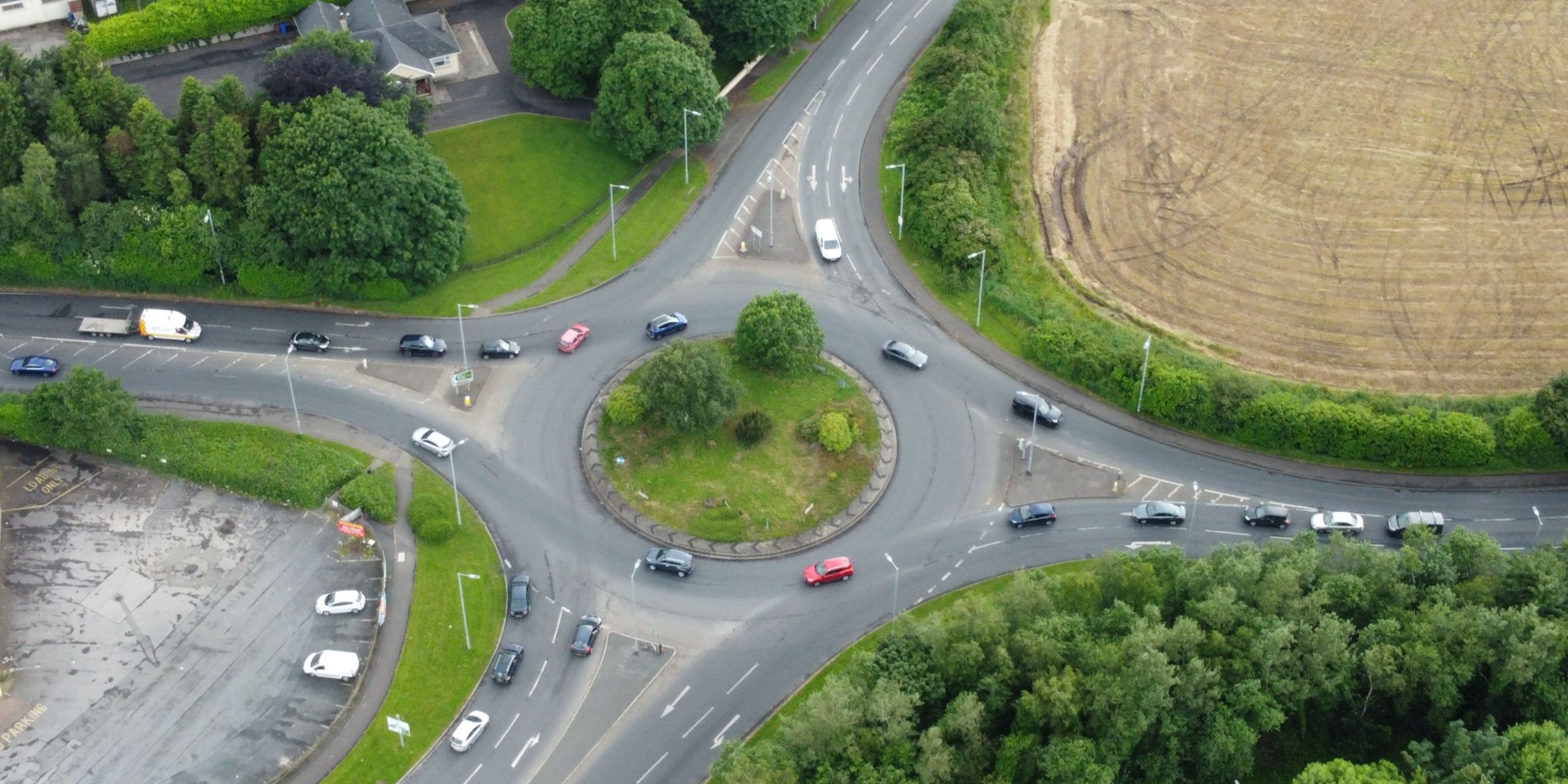
If you normally drive on the right, Irish roundabouts can take a little getting used to.
The good news? Once you’ve done a couple, they become much easier.
The golden rule is:
Give way to traffic coming from your right and to traffic already on the roundabout.
Always check the signs and road markings as you approach. Some roundabouts have different lane arrangements, so let the signs be your guide.
Think of the roundabout like a clock.
Generally:
Generally:
Use the left-hand lane unless signs or markings say otherwise.
Generally:
Most importantly, follow the signs and road markings.
Some Irish roundabouts are beautifully simple. Others seem to have been designed to keep you awake!
And don’t worry about the driver behind you. If you’re unsure, take your time and make the safest decision.
Some of Ireland’s most beautiful scenery can be found along narrow rural roads.
These roads can be winding, hilly and sometimes so narrow that you may wonder whether two cars really can fit.
They usually can!
You might also meet a tractor, cyclist, walker, sheep… or occasionally all four.
This is the golden rule.
You don’t need to drive at the maximum posted speed just because the sign says you can.
Slow down before bends and hills, and be ready for whatever might appear around the corner.
Some roads are simply too narrow for two vehicles to pass comfortably.
Keep an eye out for passing places and lay-bys.
If there’s a suitable passing place on your side, pull in safely and allow the approaching vehicle through.
Sometimes the other driver will do the same for you.
If you’ve already passed the nearest passing place, you may need to reverse slowly to let another vehicle through.
Don’t worry this is perfectly normal on Irish country roads.
Take your time, use your mirrors and never reverse quickly just because someone is waiting.
And please use proper passing places rather than private driveways wherever possible.
You may find stone walls, hedges, steep drops or soft verges close to the road.
Don’t squeeze yourself towards the edge simply to make room.
Slow down, assess the situation and communicate with the other driver if necessary.
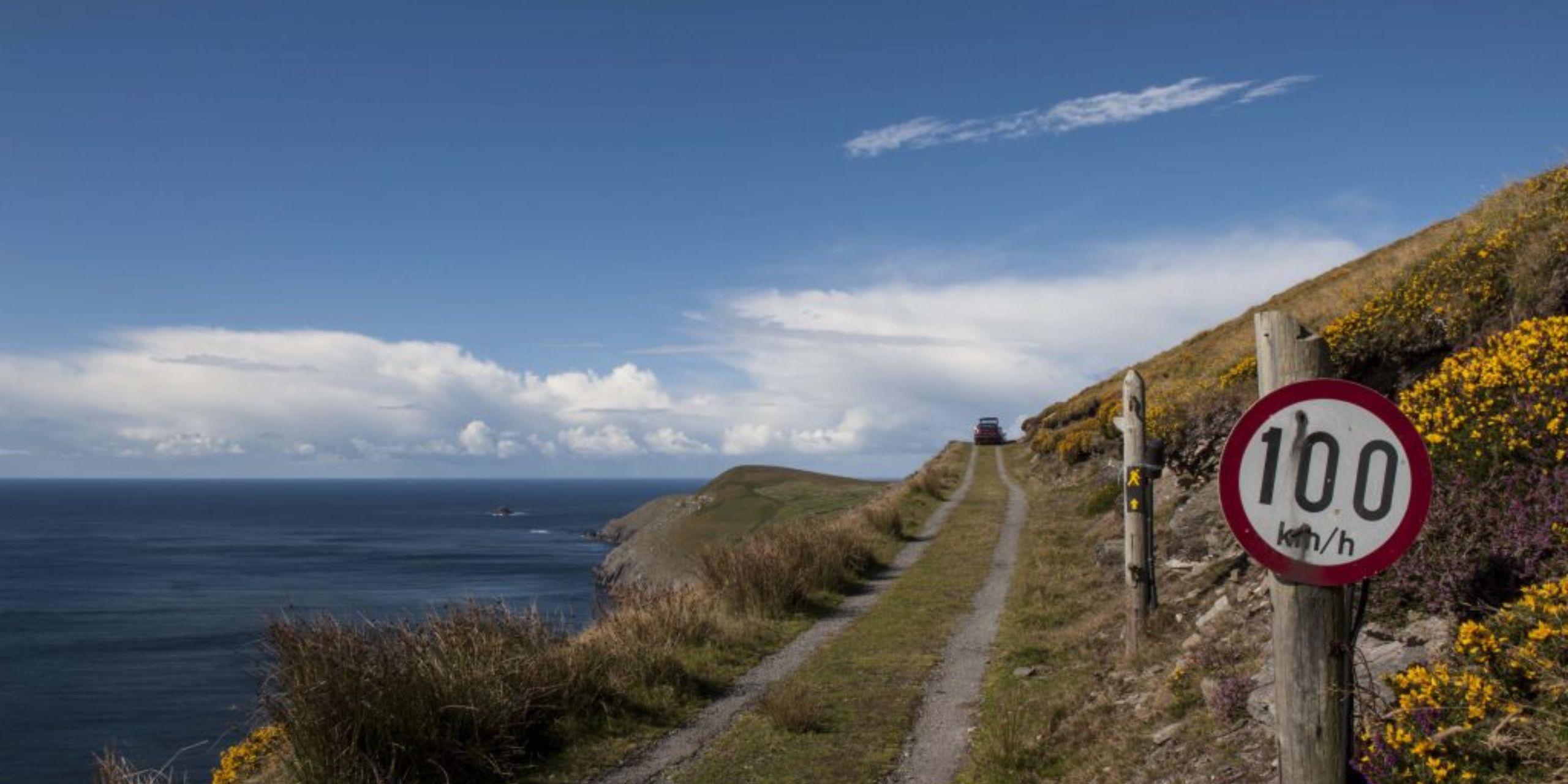
We love modern navigation apps.
But sometimes your sat-nav has a slightly different idea of “best route” than you do.
It might send you down:
If you’re driving a larger rental car, campervan or motorhome, take particular care.
If a road looks too narrow or difficult for your vehicle, you don’t have to follow the sat-nav blindly.
Stop somewhere safe, have a look at the map and choose another route.
Sometimes adding ten minutes to your journey can save you a lot of stress.
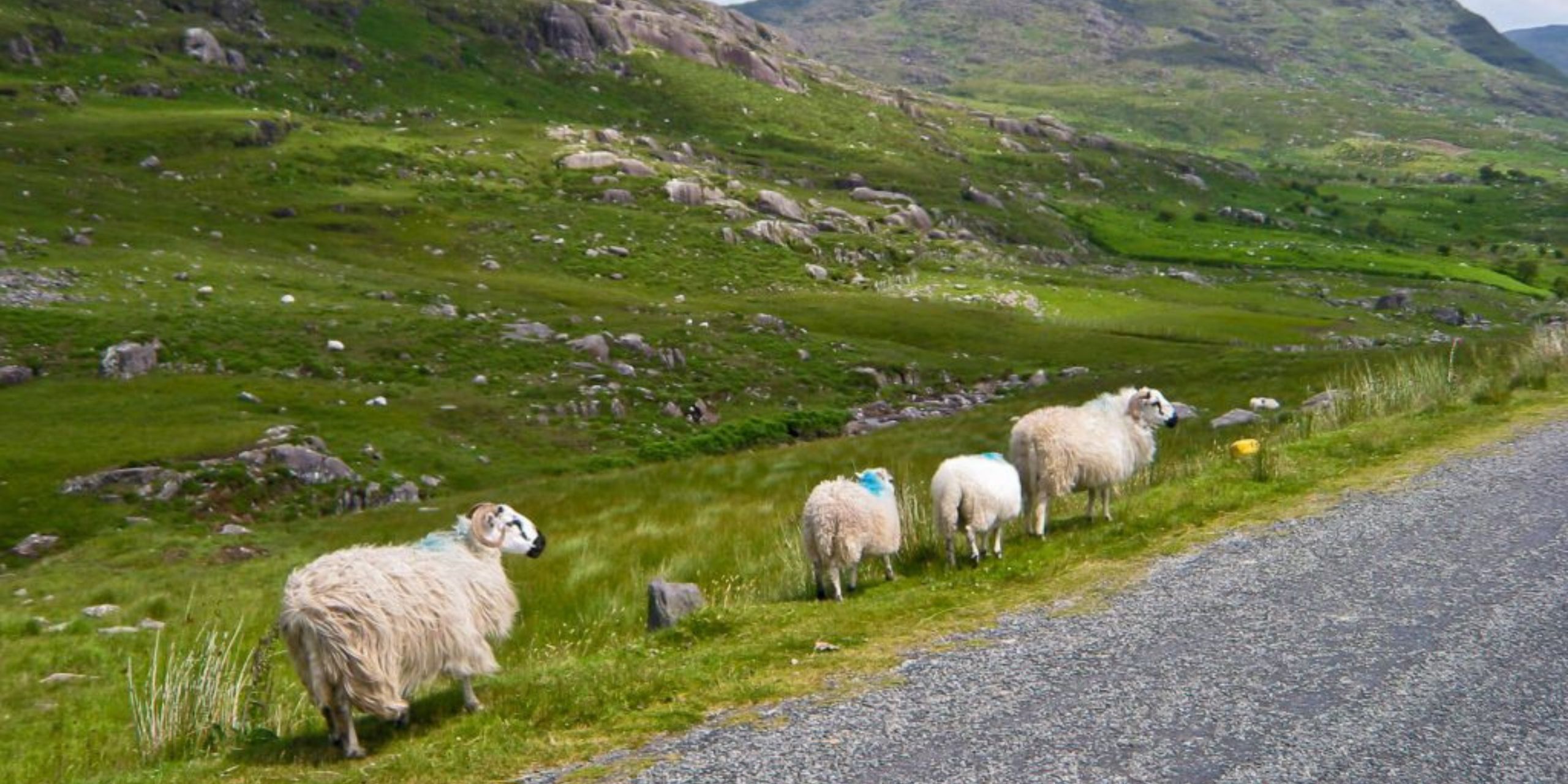
Yes, the sheep really are a thing.
You may also encounter cows, horses, tractors and other farm traffic on rural roads.
If animals are near the road, slow down and give them plenty of space.
Don’t try to squeeze past at speed. Animals can be wonderfully unpredictable!
You’ll also meet cyclists, walkers, runners and motorcyclists, particularly on scenic routes.
Many rural roads don’t have separate cycle lanes or footpaths, so give vulnerable road users plenty of room.
When overtaking a cyclist, leave a generous gap and only overtake when you have a clear view and it’s safe.
Irish rules provide for a minimum passing distance of 1 metre where the speed limit is 50 km/h or less, and 1.5 metres where the speed limit is above 50 km/h.
If it isn’t safe to overtake, simply wait.
You’re on holiday. The cyclist isn’t going anywhere!
Irish weather has a personality of its own.
You can enjoy sunshine, rain, mist and strong winds – sometimes all before lunch!
Take extra care when:
Slow down and leave plenty of space between you and the vehicle ahead.
Avoid using cruise control when conditions require frequent changes in speed.
And if the weather really isn’t playing ball, find somewhere safe to stop and wait.
That’s exactly what we do!
Parking rules vary between towns, cities and car parks, so always check the signs.
A quick reminder:
So don’t assume that one yellow line means you can park there whenever you like.
Yellow box junctions are there to keep junctions clear.
Only enter a yellow box when your exit is clear and you can continue without blocking the junction.
Don’t park:
For detailed and current information please check the RSA’s Rules of the Road.
Ireland has several toll roads, so you may come across tolls during your trip.
One that can catch visitors by surprise is Dublin’s M50.
The M50 uses barrier-free tolling. Cameras record your vehicle registration, so you won’t stop at a traditional toll booth.
If you’re responsible for paying the toll, you generally need to pay by 8pm the following day to avoid additional charges.
If you’re driving a rental car, ask your rental company how tolls are handled before leaving the airport.
Some companies pay the toll and charge you later, while others require you to pay it yourself.
It’s also a good idea to keep your rental car registration number handy.
Hiring an electric vehicle?
A little planning goes a long way.
Ireland’s public charging network is growing, but chargers are less common in remote rural areas than in towns and cities.
Before heading off on a long scenic drive:
If your itinerary takes you somewhere remote, simply build charging stops into your day.
Think of it as another excuse to stop for coffee!
Seat belts are compulsory for drivers and passengers in Ireland.
Children must use an appropriate child restraint until they reach 150 cm in height or 36 kg in weight, subject to the applicable rules.
Travelling with children?
Arrange the correct car seat with your rental company in advance.
One particularly important rule is that a rear-facing child seat must not be placed in the front passenger seat when there is an active airbag.
It’s worth checking your child-seat arrangements when booking rather than waiting until you arrive.
Using a handheld mobile phone while driving is illegal in Ireland.
If you’re using your phone for navigation, set everything up before you move off and use a proper hands-free system.
That means no:
Need to change your route?
Find somewhere safe to pull over first.
Planning to explore both the Republic of Ireland and Northern Ireland?
There’s one big difference to remember:
The Republic of Ireland uses kilometres per hour (km/h).
Northern Ireland uses miles per hour (mph).
So when you cross the border, pay extra attention to the signs.
You’ll also notice some differences in road signs, markings and traffic rules because Northern Ireland is part of the UK.
If you’re using a rental car, check with your rental company that cross-border travel is permitted and that the correct insurance and documentation are in place.
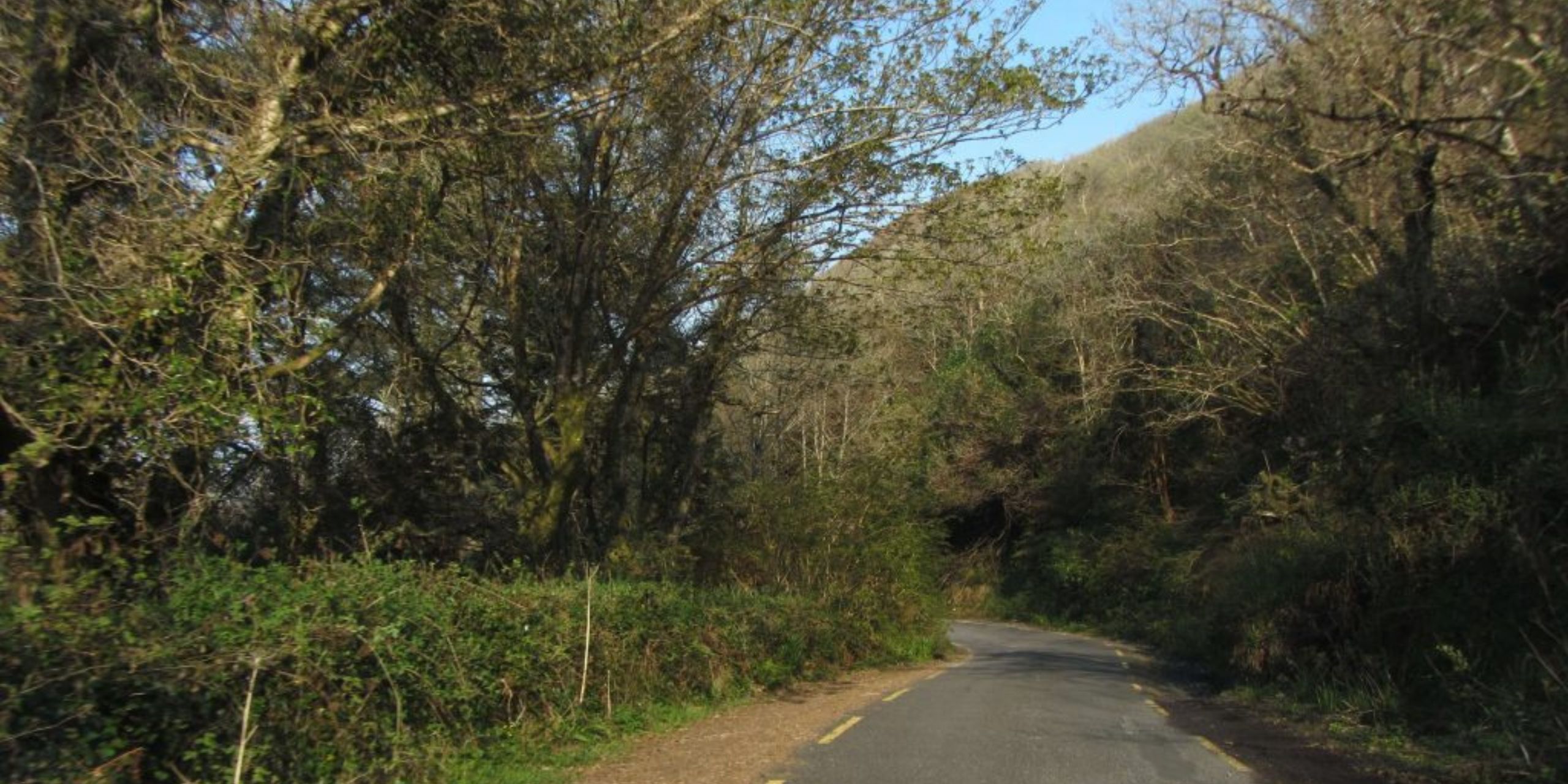
Irish drivers have a few habits visitors sometimes find amusing.
On a quiet country road, someone coming towards you might give you a little wave.
Usually, it’s simply friendliness.
You may also notice a quick flash of headlights or hazard lights as a thank-you in certain situations. These are informal gestures, though, so don’t rely on them as official traffic signals.
And don’t assume every flash of headlights has a secret Irish meaning!
Most importantly, don’t feel pressured by other drivers.
If someone wants to drive faster than you, let them pass when it’s safe.
You’re here to enjoy Ireland, not win the Irish Grand Prix.
For the most up-to-date information before your trip, we recommend checking:
Check the latest official guidance before setting off, then relax and enjoy the road. Ireland is waiting!
We get it. Sometimes you’d rather spend your holiday looking out the window than looking at the road!
All our self-drive tours come with 24/7 support, so you have help whenever you need it during your Irish adventure.
And if you don’t feel like driving, we also provide alternative ways to experience Ireland without being behind the wheel.
Get in touch with our team and let us ensure you have the perfect way to explore Ireland.